Israeli Writing/Directing team, Aharon Keshales and Navot Papushado, have provided in this, their second feature, a lavish buffet of dark treats that punctures the concept of machismo and questions whether the punishment can ever suitably fit the crime.
On a bright day in Israel, a Religious Education teacher is kidnapped by two men: one is the father of a recently murdered child and the other a dirty cop looking to solve a spate of similar atrocities. Hidden in the basement of a country cottage and believing themselves to have their man, they devise ways to torture a confession out of their hostage.
The subject matter is bleak, but Big Bad Wolves also manages to be perversely funny. Our torturers take time out from breaking fingers, so one can take a call from their abrasive and interfering mother. This constant switch and bait of the genre could easily derail everything. However, in the hands of Keshales and Paushado, it’s an act of plate spinning that really pays off. The film’s humour sharpens the nastiness before and after rather than providing a welcome reprieve.
Tight scripting, solid performances and a killer ending add up to a film that proves genre filmmaking isn’t limited to the US and Australia.
This review previously appeared on earlybirdfilm.com.
Given a worldwide release via Netflix, as well as a theatrical stint in the UK, Mindhorn is the brainchild of Julian Barratt (Aaaaaaaah!) and Simon Farnaby (Bunny and the Bull), who worked together on the wildly popular Mighty Boosh. Directed by Sean Foley (Brass Eye), Barratt plays Richard Thorncroft, a washed up actor reduced to appearing in embarrassing adverts for socks. However, it wasn’t always like this. In his heyday, Thorncroft had his own TV show in which he played Detective Mindhorn, a crime fighter who could see the truth in people through the use of his Six Million Dollar Man-esque bionic eye. It’s a show that’s all but faded into obscurity, save for its successful spinoff show starring Thorncroft’s former co-star, Peter Eastman (Steve Coogan). Oh, and it also plays a large part in the life of Paul Melly (Russell Tovey), a man wanted for murder and who believes only Mindhorn can help him. As in the actual Mindhorn… Enlisted by the police, Thorncroft returns to his former show to prevent another murder and, hopefully, get his show rereleased on DVD. A man has got to dream right?
The aforementioned Coogan covered similar ground in Alpha Papa, which saw radio DJ Alan Partridge caught up in a hostage situation at his place of work. Whilst Mindhorn never reaches the same heights as Alpha Papa, it manages to do enough to brush the former away and set up its own little world. Thorncroft is more pathetic than Partridge, who had his incompetence justified by never actually being out of work or money. Whilst Thorncroft is willing to use a tragic death to boost his popularity, fate has pre-emptively punished him by taking his hair, his looks and letting his former lover, Patricia (Essie Davies), run off with his ex-stuntman (Farnaby). Returning to Isle of Wright, where Mindhorn was filmed, is a lot like Gary and the gang returning to Newton Haven in The World’s End. It opens up old wounds, emotionally cripples Thorncroft and throws him into life threatening situations. See, this is why you never go home!
Much gentler in its comedy than its pedigree would suggest, Mindhorn manages to be surprisingly touching at times with Barratt generating enough sympathy from his audience that you end up wishing him well in his ill-deserved second chance at success. This is a man who has crushed his friend’s underfoot just to release a solo album, but when we witness him atoning for his sins, you can’t help but want to give him a hug. Throw in the absurdist humour you’d expect from the former Howard Moon, as well as several pot-shots at the high concept shows of the 80s and 90s, and Mindhorn offers up more than enough laughs to get you through an evening.
The truth about The Red Pill is that you’ll already know if this is the kind of documentary you want to watch. You’ll have heard it shouted about on news programs, with whispers shared on its dubious politics in dark corners of social media. You may have even read how it was funded by the very people its investigating, which is certainly a headscratcher in terms of conflict of interest. Its premise is simple: actress turned filmmaker Cassie Jaye delves into the world of Men’s Rights Activists (MRAs) and, whilst in deep discussion with numerous members, begins to question her own feminist beliefs. It’s a sort of coming of age tale for the moderate right. Returning to the reputation that precedes it, you’ll no doubt have heard about The Red Pill being chased out of cinemas that have bowed to protests from those who feel Jaye’s findings are too confrontational. Whilst The Red Pill doesn’t overtly champion the problematic elements of the MRA movement, neither does it question them.
Most documentaries set out with an agenda, whether it be to push a political message ala Fahrenheit 9/11 or expose an injustice as seen in the heart-breaking Silence in the House of God. Boldly, The Red Pill attempts do both, succeeding in neither. Things are off from the start when Jaye drops her initial agenda soon after she gives her introductions. Having discussed her own feminist views, Jaye touches upon rape culture and the likes of Paul Elam, the founder of A Voice for Men, who deliberately elicit responses from people by touching upon these topics with an acidic tongue. Jaye expresses dismay at his caustic and problematic words and sets out to question him, and others, about their views. And whilst she certainly gives them a platform to share their thoughts, she never fulfils on her promise to question them on the things they’ve said. In fact, she never questions anything anyone says, from the left or right. Her only real thoughts on the matter are expressed through staged ‘private’ video diaries that purport to showcase her drifting from the ideals she held close to her heart. Videos that look anything but candid. There is no long winding path to anti-feminism; Jaye cuts her chords to the movement so quickly, it’s surprising it didn’t flick her in the eye and blind her.
Put bluntly, one of the biggest issues with The Red Pill is how badly it’s put together. Whilst there’s some traction to be had dissecting the extremism that can be found on both sides of the political spectrum, The Red Pill buries it under hearsay and second hand tales. There are too many occasions where someone heard something about someone else that someone else did which led that first person to decide that feminism is wrong. It’s the kind of rhetoric you’d find on website comment boards. Whilst watching, I was reminded constantly of documentaries like Expelled: No Intelligence Allowed, a Ben Stein vehicle that attempted to shed light on a prejudice that supposedly runs deep in America’s education system in which educators who believe in creationism are persecuted. In actuality, the film was a hodgepodge of edited interviews and quotes taken out of context, where the funniest moment came from Stein trying to convince his audience that atheist pit-bull Richard Dawkins really believed in creationism. Likewise, there’s Are All Men Paedophiles?, a troubling documentary that massaged the facts to lead its audience to a predefined conclusion and made everyone who saw it want to have a scalding hot shower. Okay, The Red Pill didn’t make me want to have a shower, but it did take me a while to stop shaking my head. Statistics are twisted, fingers are wagged, lines are drawn but nothing is said.
Regardless of what side of the political fence you sit on, you don’t have to go too far to engage with others who aren’t as likeminded. Type any number of political hot potatoes into Google and you’ll find your curiosity quenched. The Red Pill might claim to offer an alternative viewpoint, but it says nothing that hasn’t already been heard a million times before. In my eyes, it doesn’t invite conversation, it screams in an echo chamber with its fingers in its ears, unpacking nothing and offering even less. It deals in absolutes, without any shades of grey, that simply drives the wedge further between ‘us and them’ whilst dealing out blame using the same broad strokes it accuses its opposition of doing.
Superheroes are likely to go the way of westerns, musicals and the dinosaurs within the next 5 years; your local box office is probably saturated on a regular basis by non-costumed men learning to become costumed superheroes before punching costumed super villains around New York, whilst several hundred digital minions try and get in on the action. And if it’s not an origin story, then it’s a sequel that has our hero learning more about punching people in New York, whilst selling us ten spinoffs lurking just around the corner (Hello Civil War!). And I say all this as someone who constantly champions Marvel’s output. Even if you’re a solid supporter of DC or Marvel, you’ve likely experienced a little cinematic universe fatigue.
Thank heavens then for Guardians of the Galaxy Volume 2; a sequel that manages to play all the same notes as its predecessor whilst still managing to be to be surprisingly emotional and, in a film that has a plant that can talk, feel small in scale. James Gunn returns from helming the first volume, picking up several space months later as Drax (David Bautisa), Gamora (Zoe Saldana), Rocket Raccoon (Bradley Cooper) and Peter Quill AKA Star Lord (Chris Pratt) are now carving out a life for themselves as guns for hire. Oh, and in case you haven’t seen the trailer, there’s also Baby Groot, again played by Vin Diesel. Sidenote: Despite Groot’s obvious cuteness, there’s never a sense that Marvel is trying to sell him in the shopping aisles. Even though I’m sure that’s exactly what they want to/are.
After Rocket gets the gang in a spot of space bother, they’re quickly rescued by Ego (Kurt Russell) who not only reveals himself to be a sort of God, but also a sort of planet. Oh, and very definitely Peter’s father. It’s a no-brainer for Russell to play the part of Ego and, let’s be honest, out there in the vast multi-verse John Carpenter has directed Russell as Starlord in the 1985 adaptation of Guardians with a script written by James Cameron and Hulk Hogan as Drax. Probably.
Gunn is clearly having a whale of a time in his sandbox and it is his sandbox. Whilst names are dropped and there a few minor cameos from other Marvel properties, Gunn manages to keep the goings on with the Avengers at a good arm’s length whilst he gleefully slaughters dozens of bad guys to the tunes of Fleetwood Mac and The Sweet. He even breaks up the established gang quickly; splitting them up into groups that allow him get under the skin of his characters. Rocket sidles up with a returning Yondu (Michael Rooker), whilst Nebula (Karen Gillan) and Gamora thrash it as only sisters can. Whilst Age of Ultron gave us more of what it thought we wanted – namely quips and… well see my first paragraph – Volume 2 feels like it’s grown organically from Volume 1. As if it hasn’t hashed out in a marketing board room.
It’s not all great news though. Whilst a dosage of heart has been injected into the narrative, with themes of family, fatherhood and love playing a large part, this attempt to water down the snarkiness of the first film results in the film’s clunkier moments. The dialogue isn’t ‘I’ve failed him in life. I won’t fail him in death’ bad, but there are moments where Volume 2 just doesn’t sparkle like you want it to.
That said, when the film gets it right, it really gets it right with numerous spectacular and often gut busting scenes. Hell, even the opening credits are worth the admission price alone with a great use of Mr Blue Sky. Perhaps one of the biggest strengths of film is Bautisa as the muscular and very literal Drax, who gets much more time on screen to grow, sharing his thoughts on love and life whilst living his life to great effect. If only we could all appreciate life as much as Drax, what happy people we would be. And it goes without saying that everyone else brings their A-game, including Chris Sullivan as the strangely monikered Taserface. Long story short, it’s just a really fun film.
Sadly, I can’t help but think that Avengers: Infinity War will dilute the goodwill of Volume 1 and 2 by trying to fit its anarchic square peg into Marvel’s corporate round hole. But we’ve got 12 months till that happens, so let’s enjoy what we have whilst we can.
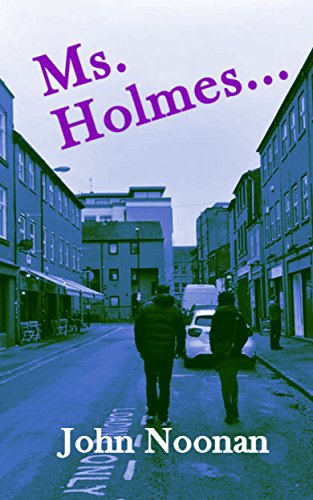
All John Watson wanted to do was hit the streets of Manchester and celebrate his birthday. What he didn’t count on was his friend, SH, crashing back into his life after a three year absence.
In a whirlwind 24 hours, John is thrown into a grotesque mystery and learns that SH has more than a few secrets in her knapsack.
Who is Michael?
What’s in the mysterious package left on a Wythenshawe doorstep?
And why exactly can’t Jurassic Park happen?
A modern interpretation of Sherlock Holmes, fans will appreciate the many nods and tributes to the world’s most famous consulting detective!
They both want something to kill the monotony of a consultancy dry patch.
Enter the PA for one of Manchester’s newest and brightest authors – The Alderley Edge Vampire.
Join Manchester’s only consulting detective/ex-criminal as she reluctantly jumps feet first into a case of stolen jewellery, gothic writers and the palatial homes of Alderley Edge.
And, as an added bonus, find out why SH has an issue with Stephen Hawking.
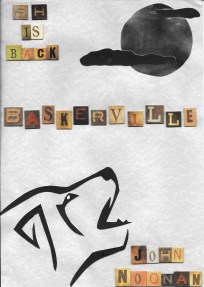
When one of SH’s close friends runs away from her abusive father, she follows her to the village of Stepford, which is playing host to the Shadow of the Beast rave.
Plagued with concern for her friend, surrounded by temptation, and with John Watson nowhere to be found, SH looks for guidance and support in the rave’s organiser, Charles Baskerville, and homeless tearaway, Jack.
Told in SH’s own words, Ms Holmes: Baskerville will see Manchester’s only consulting detective facing up against some personal demons and shedding more light on those three years she was away from Watson.



 When one of SH’s close friends runs away from her abusive father, she follows her to the village of Stepford, which is playing host to the Shadow of the Beast rave.
 John Noonan